This winter I spent some time researching and thinking about how to bring you closer to the cycling spirit of Hvar island, especially as a great biking destination all year round. Since the whole island can be explored by bike, I decided to focus on the cultural layer that made the middle part of the island so attractive for movement. After mapping the vertical in the Hvar Hike article, this is about going deeper into the cultural heritage that shaped many of the cycling routes used today.
I also created a map gathering some circular route options into a single overview, as a guide for reading this article and for your further exploration.
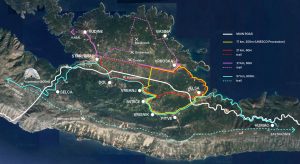
As some of you may know, Hvar is often mentioned as the island with the highest number of UNESCO-listed heritages. Among them, Stari Grad Plain (Hora) is the one that has strongly influenced sports activity over the past decade. With its 6 km long road running west to east, from Stari Grad to Vrboska, through one of the best-preserved examples of ancient Greek land division, it is no surprise that locals call it “the belly of the island”, an agricultural place that fed generations.
Ager (derived from later Roman name ‘Ager Farensis‘) is the local name for this large flat area, structured by an orthogonal network of field roads, where you are literally invited to get lost and discover its layers on your own. And the most natural way to do that is, of course, by bike. Along the way, I mapped several points that reveal the character of the landscape: Omfalos, meaning “the belly button”, marking the centre of measurement; Maslinovik, remains of a Greek defensive tower; Dračevica, a surface water source used by animals, like wild pigs, for bathing; and Katovnica, a free to enter botanical garden created by a local biology professor.
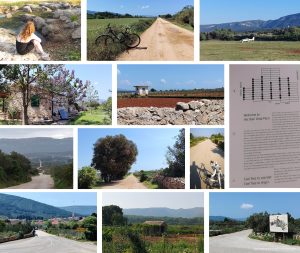
Above Hora, small historical villages sit on the slopes, places whose families cultivated land both in the plain and on the southern side of the island, from the past until today. These same villages are connected by another layer of movement: Za Križen, a traditional night procession held on Holy Thursday, when people walk clockwise 25 km over 8 hours, passing through six villages while carrying the cross: Pitve, Vrisnik, Svirče, Vrbanj, Vrboska and Jelsa. Besides being a unique cultural experience, this route also forms a beautiful and very popular circular cycling path (17km). It gives you an opportunity to explore small villages and experience breathtaking views from above on Jelsa, Vrboska and Stari Grad.
Long before the coastline became dominant, life on the island was organised inland, and these villages still carry the, usually very romanticized, atmosphere with sounds and smells of that past island life. Inbetween them, you move through olive groves, vineyards, pine forests and seasonal vegetation that constantly shifts in colour. One of the most beautiful segments, in my opinion, is the 5 km coastal stretch between Vrboska and Jelsa, used year-round for walking, running, skating and cycling. This experience can be extended further toward St Luka church bay, where the landscape becomes quieter and more open. Because these cultural layers are physically intertwined, cycling here allows you to experience the island outside of typical tourist areas, choosing your own rhythm and direction.
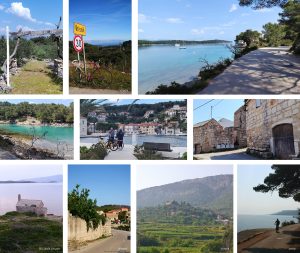
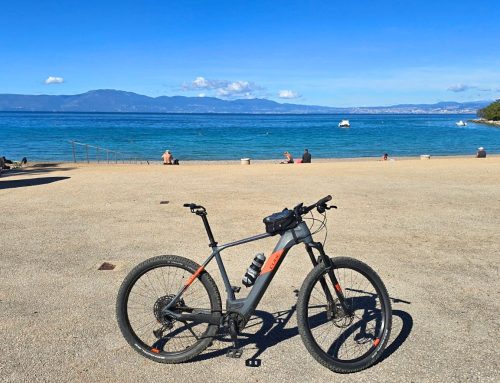
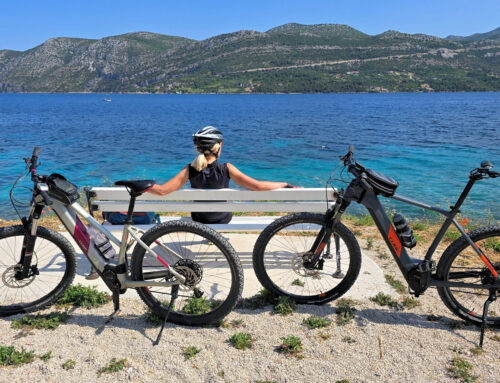
It is important to note that around half of the Hora roads are trails, which means a mountain bike or E-bike is the best option if you want full freedom of movement. Personally, I was limited to pass through Hora with my ’80s vintage Batavus road bike, as my priority was always to avoid the the main car road between Jelsa and Stari Grad, for everyone’s safety and especially during summer months!
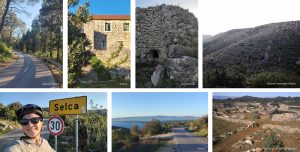
Apart from the main speed road, most island routes function as secondary or low-traffic paths, which makes Hvar a safe cycling destination. With the right bike, the terrain opens further. You can reach Sv. Nikola (626 m), ride across the ridge from Brusje to Zastražišće (around 40 km), or explore less higher points such as Selca, Velo Grablje and Vapnenica structure with the view on former lavender fields, which already offer a breathtaking view over the northern side of the island. To reach Hvar city on the far west, you will have to pass through Brusje or Malo Grablje.
From local cyclist, or in Strava terms, a local legend, Josip J., I learned that professional riders have been coming to Hvar for years for winter training. Besides distance, elevation gain, slope and terrain variety, what Hvar offers compared to many other European destinations is a mild winter climate with relatively little rain. Even when the weather is unstable, windy and rainy for days, there is almost always a window of a few hours suitable for training. If we put ourselves for a moment in the shoes of a professional cyclist like Peter Vesel, it becomes clear why. While many destinations become unsafe in winter due to ice and long wet periods, Hvar remains rideable. And when you add the fact that the island becomes almost empty during winter, the result is a rare combination! A cycling destination with diverse routes, combined with beautiful landscape, silence and continuity of movement.
Nevertheless, many cyclists choose to ride all the way along the main road to the eastern tip of the island, Sućuraj, and I can recommend stopping at the Fjori Fjora botanical garden along the way. For those interested in distance, the main island road also offers clear benchmarks:
Stari Grad – Sućuraj – Stari Grad (120 km) — a grand fondo distance
Hvar – Sućuraj – Hvar (160 km) — a full century ride
Today, most organised cycling tours take place in September and October, although some riders are increasingly coming earlier in the year, extending the season and gradually shaping Hvar into a recognised sports destination. With BBK Faros mountain bike club, Josip also organizes already famous XCP Hora Faros (29.2km/340m), a recreational race as part of the ”XC Winter League of Dalmatia”.
If you search online, you will find reliable and well-structured information about cycling routes, many of them clearly explained and mapped. I am sharing one useful overview here: https://visithvar.hr/see-and-do-hvar/bike-routes/
And if you decide to come and explore the island, feel free to reach out. I’m always open to walk or bike Hvar together :)
About the Author: Josipa Slaviček